 UK
UK  EN
EN  RU
RU 

Moving within Poland is not just a бытовое change of address for a foreigner. Very often, a new place of residence also brings new legal obligations: you need to update your correspondence details, complete a new address registration (meldunek), notify the urząd or other institutions connected to your documents, work, studies, or financial matters. This is exactly the stage where people often lose control of the situation: it seems like once you have moved, that should be enough. But for Polish authorities, what matters is not the fact that you are already living at the new address, but whether they have been officially informed about it.
This kind of inattention is especially risky for those waiting for a decision on a residence card. A single letter from the voivodeship office sent to your old address may contain a request to submit additional documents, appear for an appointment, or provide explanations. If you do not receive it in time, your case may be delayed or even put on hold. That is why changing your address in Poland is not a minor issue, but a matter that directly affects your legal status and the progress of your administrative procedures.
We’ll explain how to update your address properly without putting your documents at risk

In this article, we will go through everything step by step: when a new meldunek is enough, when you absolutely need to write to the voivode, whether you need to replace your residence card if it shows your address, and which other institutions should be informed about your new place of residence. The material is structured so that you can quickly understand what applies to your particular situation.
Why You Should Not Ignore a Change of Address in Poland
When a foreigner changes their place of residence, there are almost always at least two separate tasks to deal with. The first is to complete the formal steps that follow directly from the law or from an administrative procedure. The second is to update the address wherever it matters for communication, correspondence, and ongoing matters.
In other words, a change of address is not only about meldunek. It is also about:
- receiving letters from the voivodeship office;
- having an up-to-date address for your bank or insurance company;
- staying in contact with your employer or educational institution;
- ensuring continuity in administrative procedures;
- avoiding a situation where an important letter is sent to your old address and you do not even know about it.
In practice, many problems arise not because a person has done something illegal, but because they simply failed to report the move on time.
If You Are Living in Poland on a Visa or Visa-Free Status
If you are staying in Poland on the basis of a visa or visa-free travel and have not yet applied for a residence card, your main obligation concerns the registration of your place of residence. In other words, after moving, you should arrange a new meldunek if it is required in your situation.
In this scenario, there is usually no separate obligation to notify the voivode or starosta solely because you have changed your address. However, it is important to understand that if other circumstances also change together with the move, such as your place of work, the nature of your employment, or the terms of your contract, then other administrative issues may arise that are not directly related to the address itself.
Meldunek After Moving: When It Is Required
Meldunek is a separate issue and should not be confused with notifying the voivode about a new correspondence address. If you have changed your place of residence, a new registration at your current address must be completed in accordance with the applicable rules. For many foreigners, this is the first and most obvious step after moving.
To avoid missing anything, think about it this way:
- First, check whether you are entitled to obtain a new meldunek at the new address.
- Then see whether you also have an ongoing case at the urząd or already hold a residence card.
- After that, update your address separately wherever it matters for correspondence.
This logic helps you avoid reducing everything to a single step. Completing a meldunek does not automatically mean that all other authorities have been informed.
Changing Your Address While Waiting for a Residence Card
This is where the issue becomes much more serious. If you submitted your residence card application by post and are waiting for a decision, the correspondence address in your case should be updated as quickly as possible. It is during this period that the urząd most often sends:
- requests for additional documents;
- notifications that you must appear in person;
- letters requesting clarification of your information;
- the decision in your case or other important correspondence.
If all of this is sent to your old address and you no longer have access to it, the risks are very real: a missed deadline, suspension of the proceedings, additional explanations, and wasted time.

How to notify the voivodeship office about your new address
In most cases, a written notification about the change of correspondence address is used. It usually includes:
- your personal details;
- your old address;
- your new address;
- your case number, if it has already been assigned;
- the date and your signature.
If you do not yet know your case number, this does not mean that you cannot notify the urząd. In that situation, it is important to provide as much identifying information as possible so your case can be located. It is often advisable to attach a copy of the passport page with your personal details to reduce the risk of confusion.
The notification can be submitted in person or sent using a method accepted by the specific urząd. However, there is one important practical nuance here: even after you send the notification, it is worth monitoring your old address for some time, if possible. Not all changes are entered immediately, and some letters may already be on their way.
What to Do If You Already Have a Residence Card
Many people mistakenly think that once they have received their residence card, a new address no longer matters much. In reality, that is not the case. If you already have a residence card, the voivodeship office should still have your current correspondence address, especially if you plan to submit future applications, extend documents, change the basis of stay, or take other administrative steps.
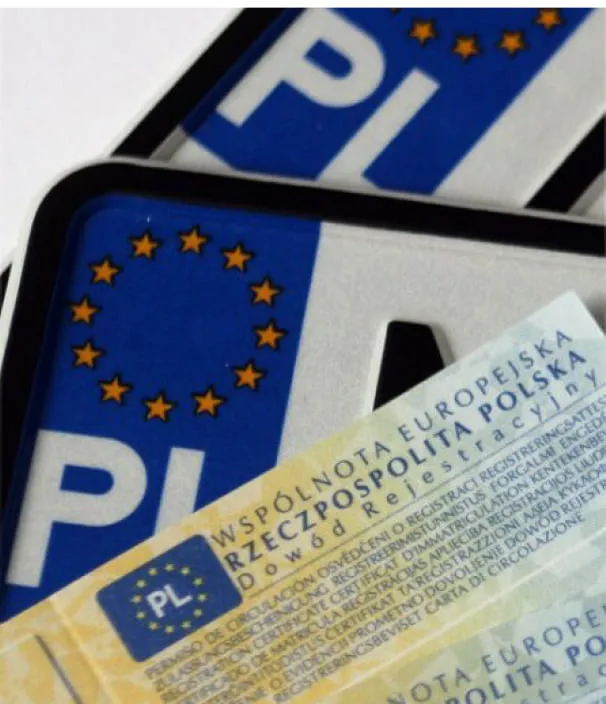
You also need to look at the residence card itself. If your residential address is stated on the card, then moving may mean you need to replace the card as a document. This does not mean that the entire legalization process in Poland must be completed again. But the plastic card itself, if it contains outdated details, may need to be reissued.
Do you always need to replace a residence card because of a new address?
The answer is not the same in every situation, so it is important to look at the specific document and the current practice of the urząd. But if your card shows your address, you should not ignore the move. It is better to check this immediately than later find yourself with a document that contains outdated information.
At Work Permit, we often help with exactly these “small but important” issues: situations where everything seems formally fine, but the person is not sure whether it is enough just to notify the authorities about the new address, or whether it is already necessary to apply for a replacement card.
Deadlines for Notifying About a New Address
When it comes to meldunek, you should follow the separate deadlines that apply to registering your place of residence. But if the matter concerns your residence card case or your ongoing contact with the voivodeship office, it is better to act immediately rather than wait for a “convenient moment.”
From a practical point of view, the right approach is:
- do not postpone the notification for several weeks;
- update the address immediately after the actual move or as soon as it becomes clear that your correspondence address has changed;
- keep proof that the notification was submitted or sent;
- monitor correspondence at the old address for some time.
Who Else Should Be Informed About the Move
Even if the law does not explicitly require you to notify every institution separately, there are many places in a foreigner’s life in Poland where an up-to-date address matters. Sometimes it is not a matter of a fine, but of convenience, security, and avoiding unnecessary problems.
The most common institutions where you should update your address
- the bank where you have an account or a loan;
- your insurance company;
- your employer;
- your educational institution or your child’s kindergarten / school;
- ZUS — if you have direct dealings with it;
- tax authorities — if relevant to your situation;
- your mobile phone, internet, or television provider;
- medical institutions where your address matters for contact or documentation;
- the court or other authorities, if separate proceedings are ongoing;
- your landlord or previous landlord, if that makes practical sense.
This list is not exhaustive. After moving, it is worth going through all your active relationships in Poland and asking yourself one simple question: can this institution send me an important letter?
Change of Address and Change of Other Circumstances: Do Not Confuse These Processes
Very often, a move does not happen on its own, but at the same time as a change of job, employer, marital status, studies, or business activity. And this is where a typical mistake appears: a person reports only the new address and assumes that this is enough.
In reality, these may be different legal events that require separate steps. For example:
- You moved — that is one issue.
- You changed your employer — that is a different issue.
- You are waiting for a residence card based on employment — that is a third issue.
So the address may be just one element within a bigger life change. That is exactly why, in some cases, it is better not to deal with everything piece by piece, but to review the entire case properly once and for all.
Step by Step: What a Foreigner Should Do After Moving Within Poland
To make things easier for you, here is a practical checklist after changing your place of residence:
- Check whether you need a new meldunek at your new address.
- If you are waiting for a residence card, immediately prepare a notification to the voivodeship office about your new correspondence address.
- If you already have a residence card, check whether you only need to update your correspondence address or also replace the document itself.
- Update your address with your bank, employer, service providers, and other important institutions.
- Keep proof of all submitted notifications.
- Monitor your old address for some time so you do not miss letters that may have been sent earlier.
When It Is Better Not to Handle Everything on Your Own
If your situation is simple — for example, you moved, completed a new meldunek, and have no open administrative cases — everything can usually be handled relatively calmly. But if you are waiting for a residence card, do not know your case number, are unsure whether the card itself needs to be replaced, or have also changed jobs or other circumstances at the same time, it is better not to act blindly.
In such situations, it makes sense to delegate the review of your case to professionals. Work Permit can help assess exactly who needs to be informed in your specific situation, how to properly prepare the notification to the urząd, and whether the change of address creates any additional obligations regarding your documents.
We will help you update your details correctly for the urząd and other institutions

Changing your place of residence in Poland is not only a household matter, but also an administrative issue that should be handled properly. The sooner you update your address wherever it truly matters, the lower the risk of missing a letter, a deadline, or an important step in your case. And if your situation is more complicated than a standard move, do not hesitate to have it checked professionally — it often saves a great deal of stress and delay.