 UK
UK  EN
EN  RU
RU 

Starting your own business in Poland is possible even without Polish citizenship — but it is important to properly align your legal stay status, your PESEL number, and your business structure. This is exactly where mistakes happen most often: people register a business “blindly,” do not think through taxes, postpone accounting “for later,” and then face account blocks, fines, or problems with legalization.
This article is a practical guide on “how to start your own business activity in Poland” and “how a citizen of Ukraine can open a business in Poland.” We will look at who is eligible to register, which structure to choose (JDG or Sp. z o.o.), what to prepare in advance, and which points are not worth saving time on. And if you want to go through the process without stress, Work Permit provides full support for opening a business turnkey: from choosing the right structure and PKD codes to registration and basic tax planning.
We Will Help You Choose The Right Business Structure Without Unnecessary Mistakes

Who Among Ukrainians Can Open A Business In Poland And Why “Legal Stay” Is The No. 1 Starting Point
The key condition for doing business in Poland is legal stay and the ability to confirm it in government systems. For citizens of Ukraine who arrived because of the war, a special legal regime applies in Poland, and as of the end of 2025, legal stay under these rules has been extended until March 4, 2026.
It is important to understand one practical thing: registering a business is not just about “submitting an application.” After that come the bank, the tax office, ZUS, contracts, and invoices. That is why your status cannot just be something “you know in your head” — it must be something you can confirm both with documents and online through official government services.
There is one more point that is often underestimated: the rules for Ukrainians have changed and continue to change. That is why before starting, you need to verify exactly what status you have (UKR/residence card/visa/stamp, etc.) and whether it gives you the right to open the exact type of business structure you want. Official instructions for Ukrainians on opening a business are published on the Biznes.gov.pl portal.
PESEL And Profil Zaufany: “Two Keys” Without Which Online Registration Often Comes To A Stop
In practice, most actions in Poland are tied to PESEL and Profil Zaufany (trusted profile). PESEL is needed for identification in government systems, while Profil Zaufany is required to sign electronic applications and manage matters online. This exact connection is directly described in the Biznes.gov.pl instructions: a Profil Zaufany is necessary to register a company online.
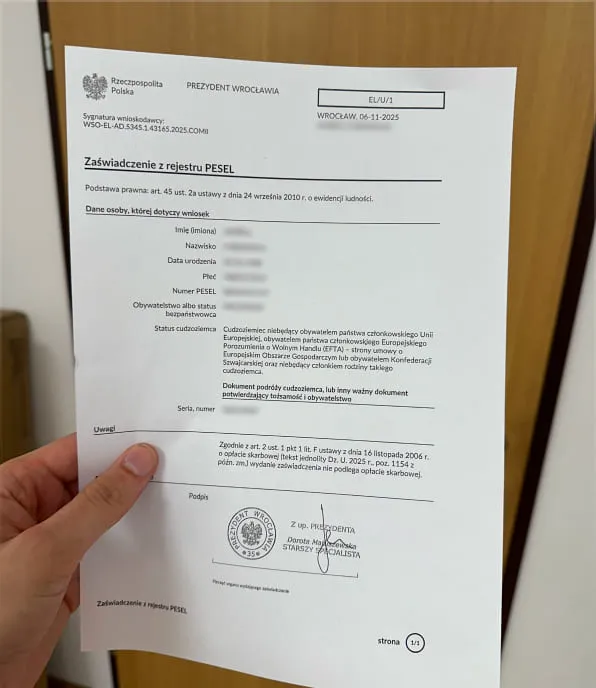
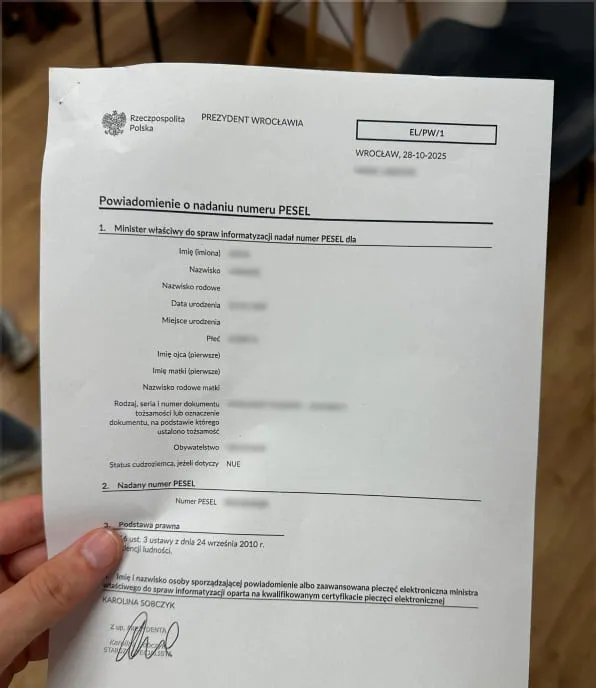
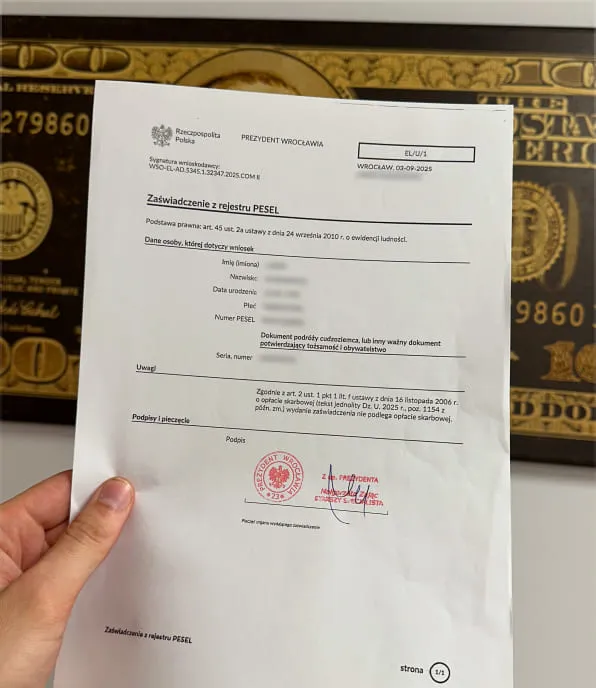
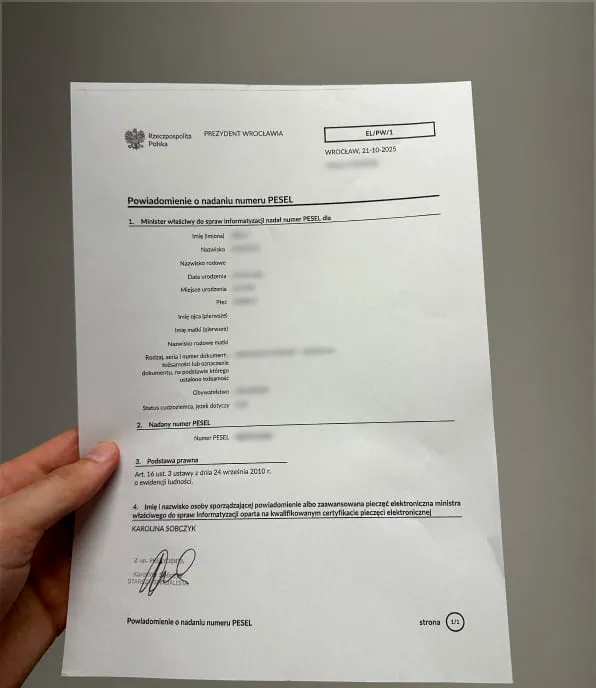
A PESEL number is usually obtained at the municipality office (Urząd Gminy/Urząd Miasta) — the procedure depends on the basis of stay, but the logic is the same: you submit an application, confirm your identity with a document, add a photo, and receive your number. After that, you set up a Profil Zaufany (often through a bank or ePUAP) so that you can sign official documents without visiting institutions in person.
Why this is especially important for business: when you register a JDG in CEIDG or submit changes (address, PKD, suspension), the most convenient way is to do it online — and without a Profil Zaufany, you will either get stuck or be forced to complete more steps offline. If your goal is to start quickly and not waste time on bureaucracy, begin with this block first.
JDG (Sole Proprietorship) Or Sp. z o.o.: Which Structure Should A Ukrainian Choose And What Really Influences The Decision
The most common option for getting started is a JDG (similar to a sole proprietorship), which is registered in CEIDG. It is often chosen by freelancers, tradespeople, small service providers, early-stage e-commerce sellers, and consultants. Its strengths are speed, simplicity, no share capital requirement, and clear control. But there is one fundamental downside: the entrepreneur is personally liable for obligations with all of their assets, and this must be assessed realistically if you are entering high-risk industries or working with large amounts of money.
The second popular option is a Sp. z o.o. (limited liability company), which is registered through court systems (KRS, S24/PRS). This structure is more often chosen when there are plans for partners, investment, hiring employees, higher turnover, or when a “corporate” structure is needed for contracts. The advantage is limited liability and a more “serious” perception by counterparties. The disadvantages are more expensive and more complicated administration, more formalities, and usually more complex accounting.
What really determines the choice is not “which one is easier,” but the type of activity, potential risks, income model (services/products/B2B), plans for legalization, and tax strategy. That is why the right start begins with a short analysis: what you are selling, to whom, how you plan to accept payments, whether you need VAT, and whether you will have employees. Without this, even a business that is “perfectly registered” can become unprofitable as early as the first quarter.
Business Registration: What Happens “After Submitting The Application” And Where People Most Often Make Mistakes
Once the structure is chosen, the next step is the technical part — registering a JDG in CEIDG or a company in KRS. Officially, registration for Ukrainians is described on Biznes.gov.pl, including the requirements for PESEL and the preparation needed before filing. But in real life, the main difficulties begin after you tick the box saying the business has been created.
The first type of mistake is “not thinking about taxes and ZUS.” A person opens a JDG and then is surprised that there are contributions, advance payments, deadlines, reporting obligations, and documentation requirements. The second type is “incorrect business activity codes (PKD) and chaos in contracts/invoices,” which leads to questions from the bank or counterparties. The third is “dealing with accounting too late”: at the start, it seems like something that can be postponed, but it is exactly at the beginning that the right document flow system must be set up.
There is one more practical nuance: if you work internationally, accept payments from abroad, or also receive income in Ukraine, you need to understand the logic of tax residency and the risks of double taxation. There is no universal answer here for everyone — the facts matter: where you live, how many days you stay in Poland, where your “center of interests” is, and what kind of income you receive. If you do not take this into account, you may face unpleasant surprises in your annual tax returns.
How We Help: A Fast Launch Without Bureaucratic “Quests”
If you need a business in Poland not “just for form’s sake,” but as a real tool for life and income, the best way to start is with support. At Work Permit, we help Ukrainians choose the right structure (JDG or Sp. z o.o.), prepare the business logic, collect the basic document package, avoid common mistakes related to stay status, PESEL/Profil Zaufany, and properly set up the first steps for taxes and document flow.
We work in a way that delivers a practical result: you understand exactly what you are registering, how you issue invoices, how you accept payments, what you do with VAT, and which deadlines you need to monitor. And if the business is connected with further legalization (residence card, change of basis of stay, family-related cases), we immediately explain how to avoid taking a step that could complicate the process later.
We Will Help You Go From Choosing A Structure To Registration